French Brioche Bread
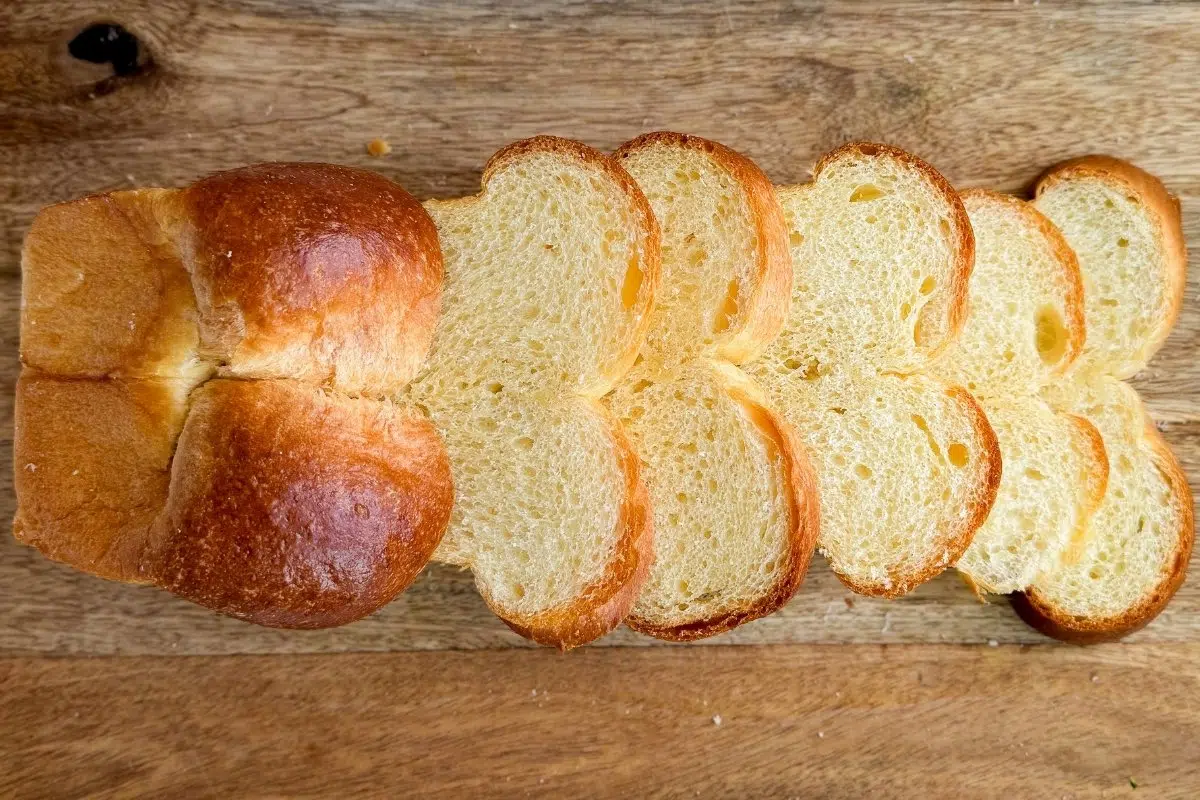
French brioche bread is rich, buttery, and unbelievably soft, with a tender crumb and golden crust that feels straight from a French bakery. While brioche may seem intimidating, this recipe walks you through each step so you can create a beautiful bakery-style loaf right at home. Whether enjoyed warm with butter or transformed into decadent French toast, this classic bread is worth every bit of effort.
Quick Look: French Brioche Bread
- Prep Time: 30 minutes
- Cold Fermentation Time: 8 to 24 hours
- Bake Time: 22 minutes
- Total Time: 10 to 24 hours
- Servings: 2 loaves, 24 slices
- Calories: 180 kcal/slicke
- Cook Method: Baked at 375°F
- Flavor & Texture: Super soft, fluffy, feathery bread, with a rich buttery flavor.
- Difficulty: Easy to Medium
SUMMARIZE AND SAVE THIS RECIPE CONTENT ON:
When I was running my bakery, rich, buttery brioche was one of my most popular weekly breads I offered. Many of my customers loved using it for grilled cheese sandwiches and French toast. It’s truly a decadent bread that melts in your mouth!
Why You’ll Love Making Brioche Bread
Table of contents
- Quick Look: French Brioche Bread
- Why You’ll Love Making Brioche Bread
- What is Brioche
- Ingredients for French Brioche Bread
- Substitutions and Variations
- How to make French Brioche Bread
- Tips for Bakery-Style French Brioche Bread
- Frequently Asked Questions
- How to Store French Brioche Bread
- More Bread Recipes with Yeast
What is Brioche
Brioche is a rich, buttery bread, originating from the Normandy region in France. It’s super soft and pillowy. Due to it’s high egg and butter content, it bakes up golden brown, with a feathery, buttery crumb. It can be used for many different recipes including Brioche Hamburger Buns, cinnamon rolls, and French toast. I love using it for my Baked French Toast with Berries.
In case you were wondering how to say this French word, it’s pronounced BREE-OH-SH. Now you can impress your friends with your bilingual and baking abilities!
Ingredients for French Brioche Bread
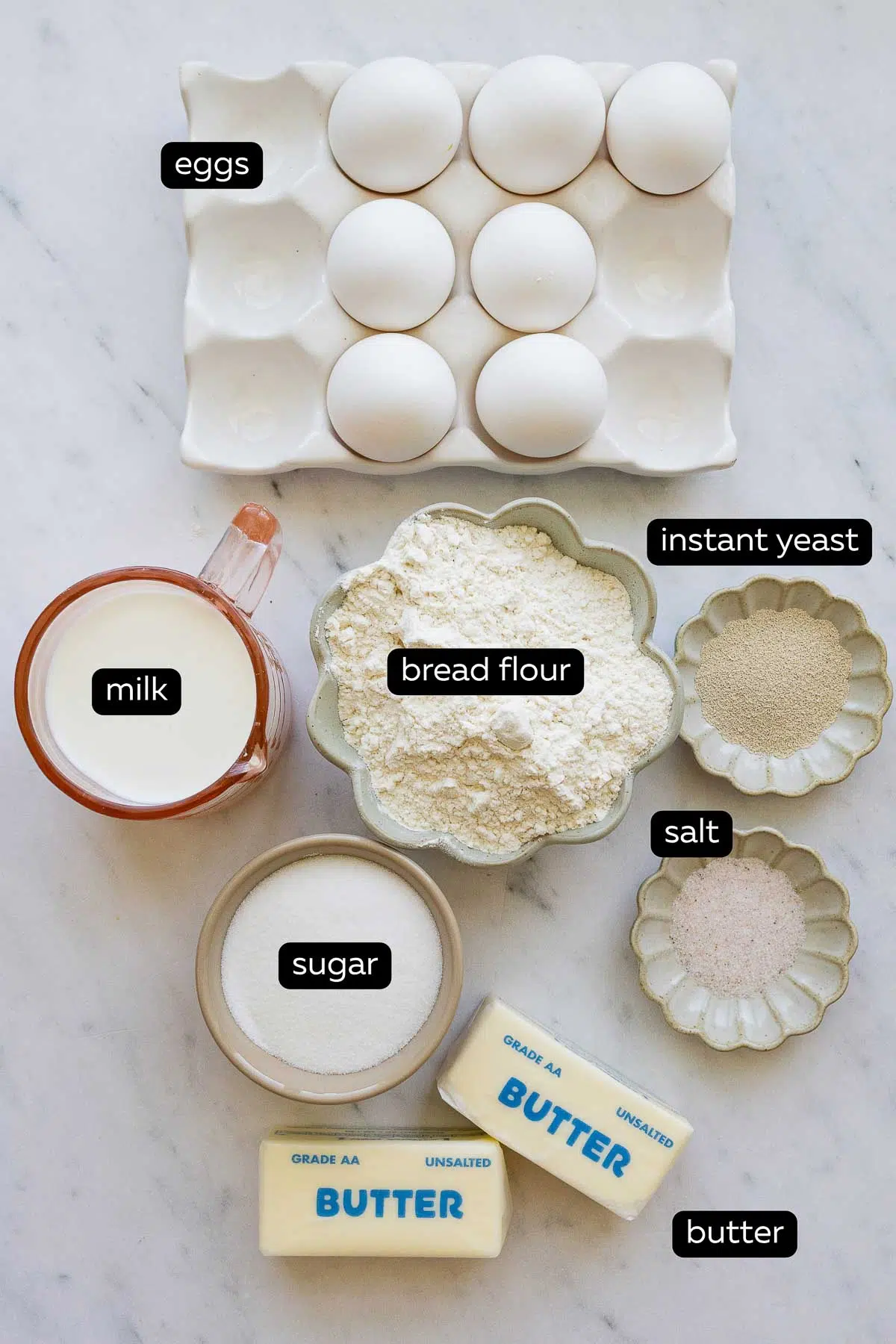
- Eggs – A classic brioche dough uses eggs as the foundation to provide structure, color, and a rich flavor.
- Butter – Butter is a defining ingredient in French brioche. It coats the proteins in the dough, creating a soft, pillowy crumb. Since the butter is such an important part of brioche, I suggest using a high quality butter like a European butter. This type of butter has a higher butterfat content of 82% or more and will make a more flavorful, buttery tasting brioche bread. Some European butter brands are Kerrygold, Plugra, and Danish Creamers.
- Sugar – Just a small amount of sugar will create a bit of sweetness to round out the rich flavor of the eggs and butter.
- Instant Yeast – When using instant yeast, you can add it directly to the dough instead of having to bloom it first (like with active dry yeast).
- Bread Flour – Using a flour with higher protein like bread flour, will help to create a better bread structure for this brioche bread.
Substitutions and Variations
- Yeast – You can use active dry yeast instead of instant yeast, but you’ll need to “bloom” it first. Add it to the water, sprinkle a pinch of the sugar over it, and let it sit for 15 minutes. During that time it should bubble up. I have an article called, Active Dry Yeast vs. Instant Yeast if you’d like to learn more about how to use each type of yeast.
How to make French Brioche Bread
Mixing the dough
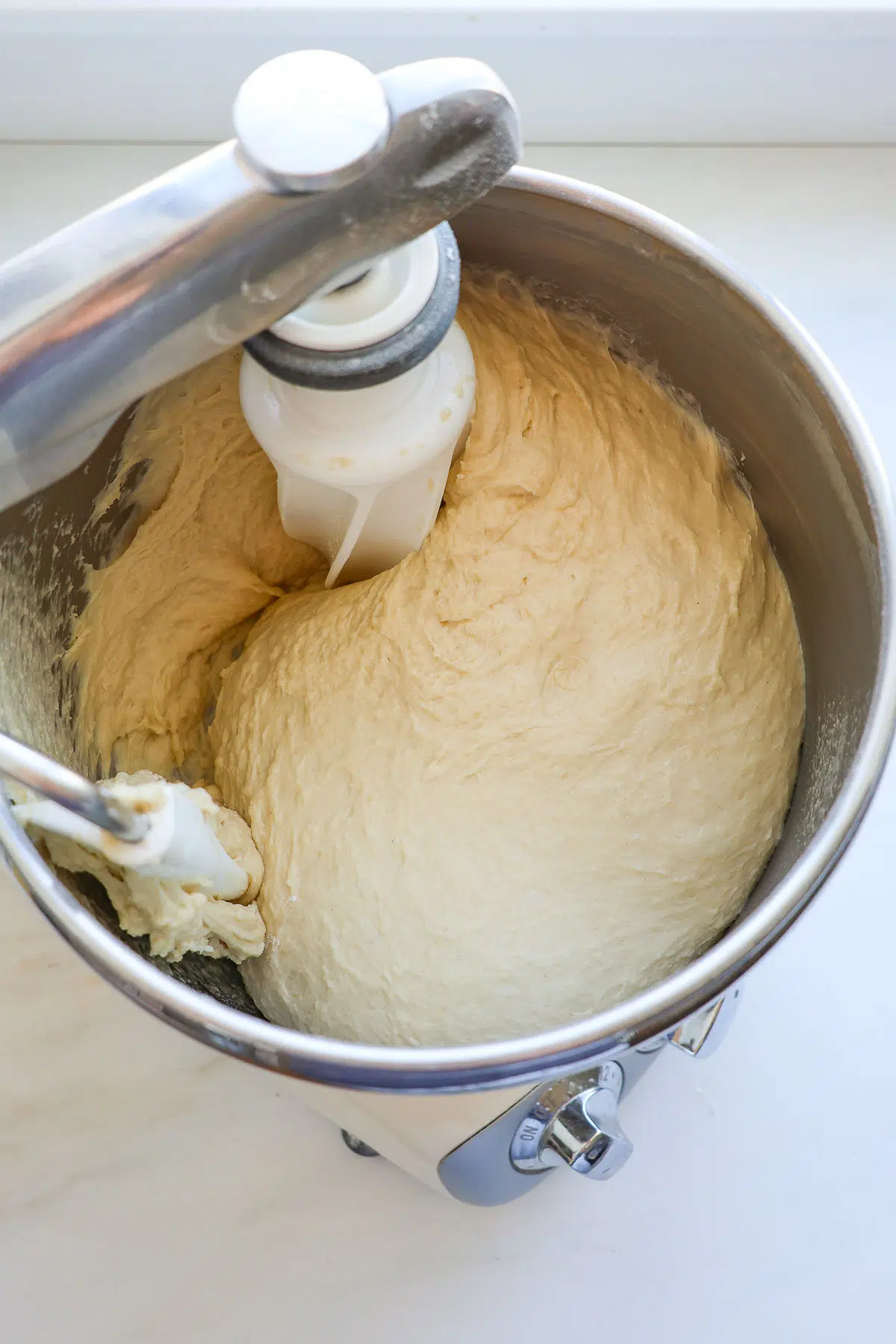
Step 1: Mix the dough. Start with the wet ingredients first, then gradually add the flour. Add the butter 1 tbsp at a time.
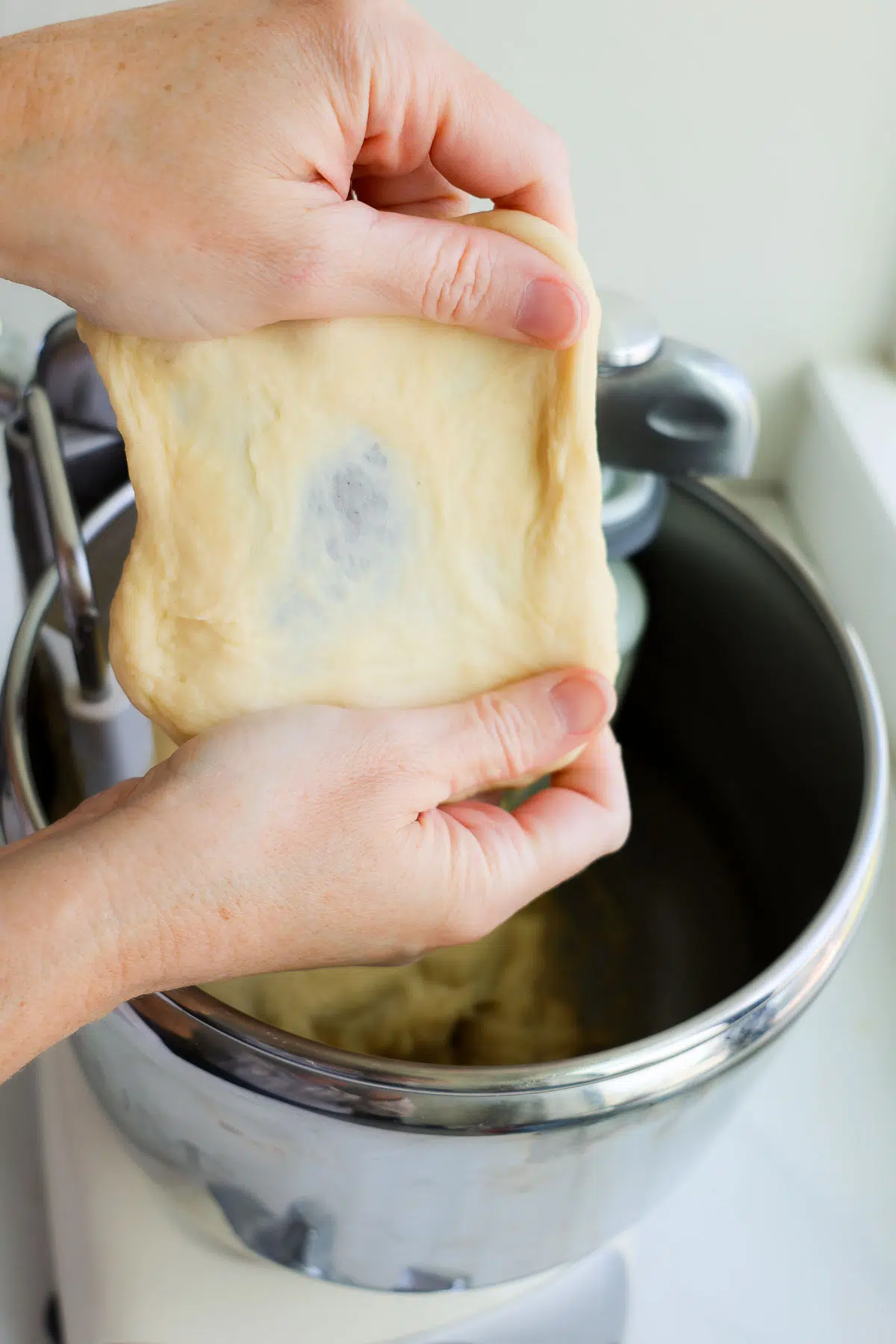
Step 2: Knead for around 10-12 minutes or until the dough reaches windowpane.
Windowpane Test
Using the windowpane test is a technique used by bakers to see if their dough has kneaded long enough and developed a strong gluten structure. The gluten holds the bread together as it rises and bakes. When the dough is kneaded properly, you should be able to take a piece and stretch it apart a few inches without it tearing, with it even becoming translucent (like looking through a windowpane). This is especially important in highly enriched doughs like for brioche bread, crescent roll dough, and Biscoff Cinnamon Rolls.
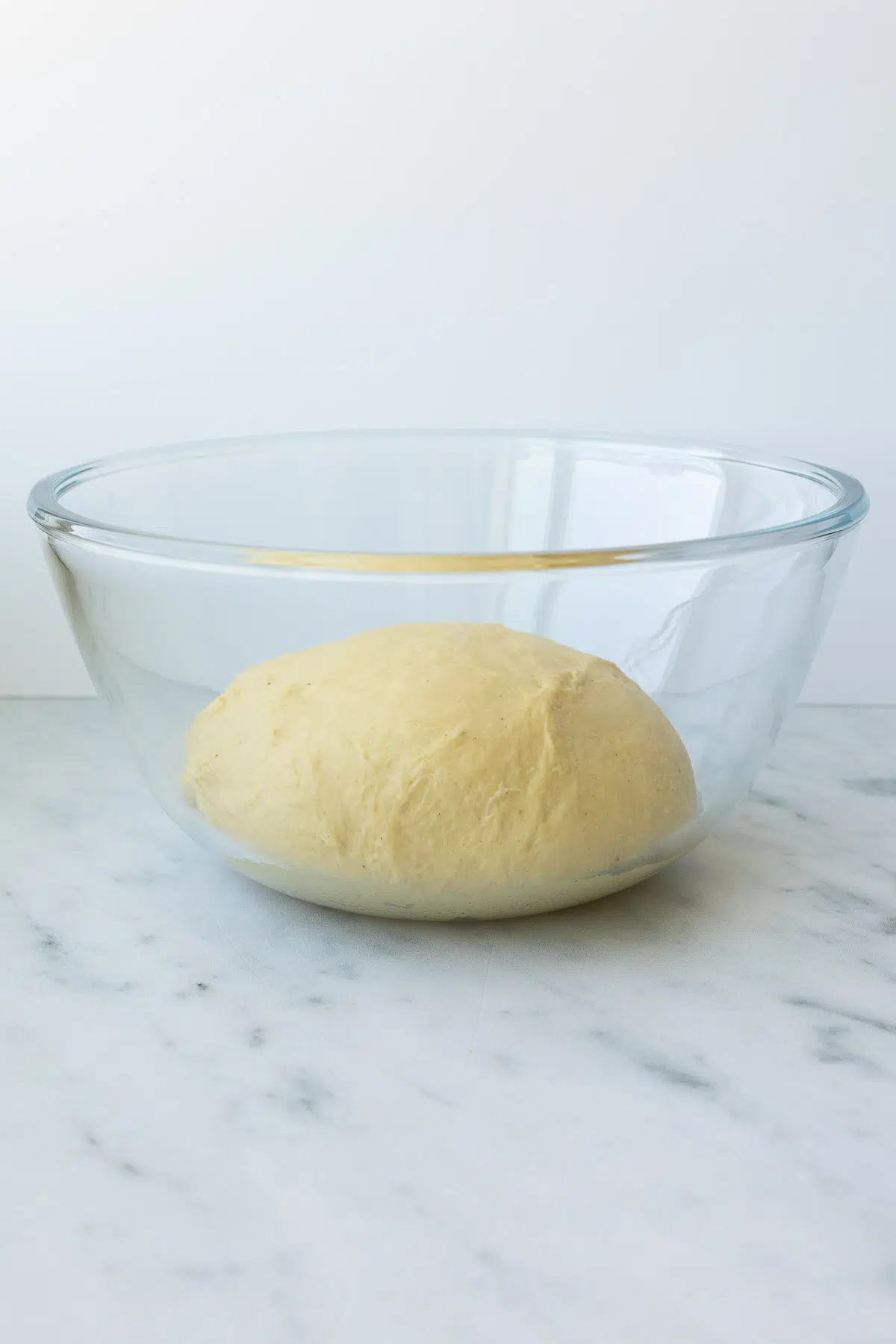
Step 3: Place the dough into a bowl, cover and place in the fridge to proof overnight. Since brioche is such a soft dough, it’s best to shape it when it is cold.
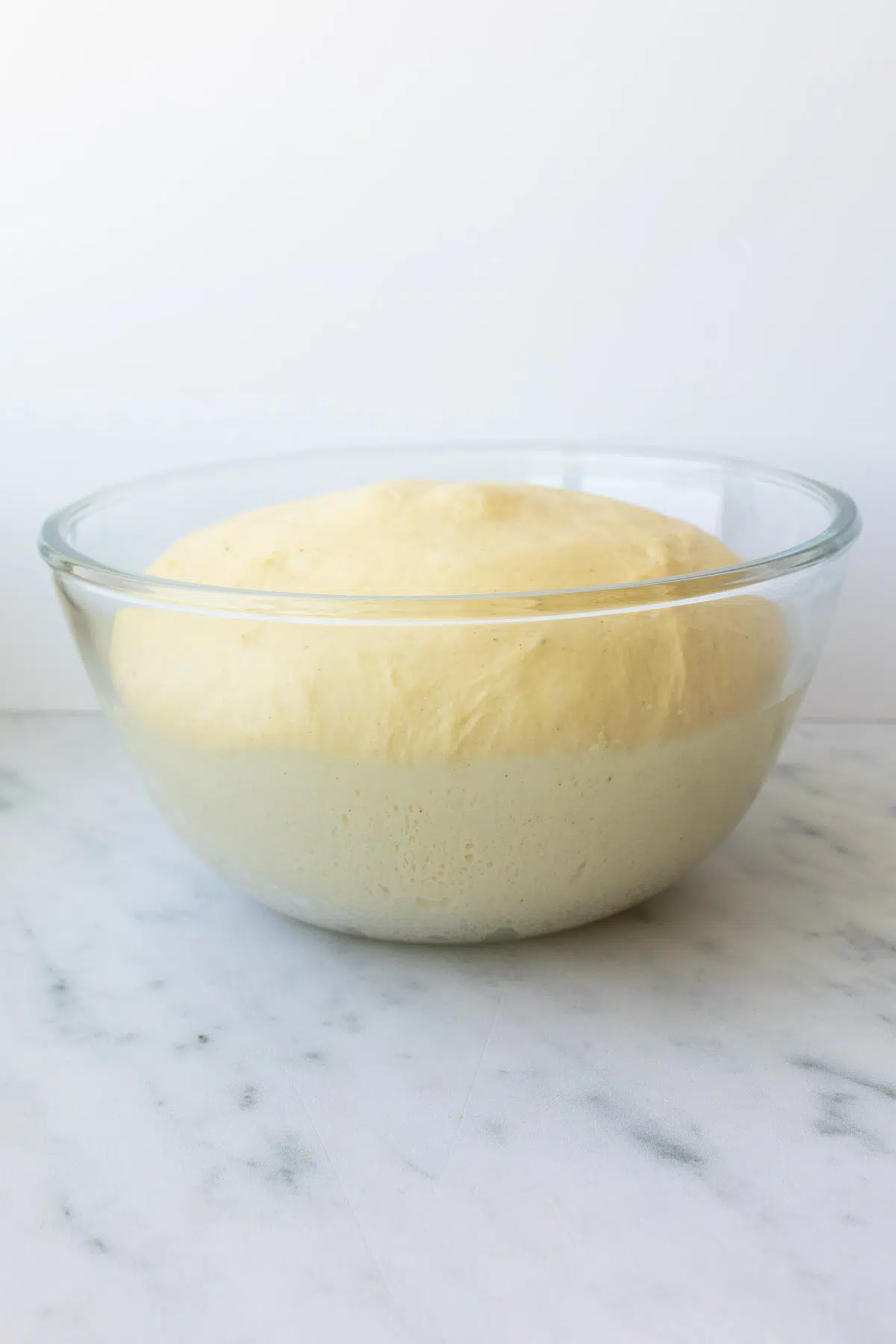
Use a large bowl. The brioche dough will double in volume, even while in the refrigerator.
How to shape French Brioche Bread
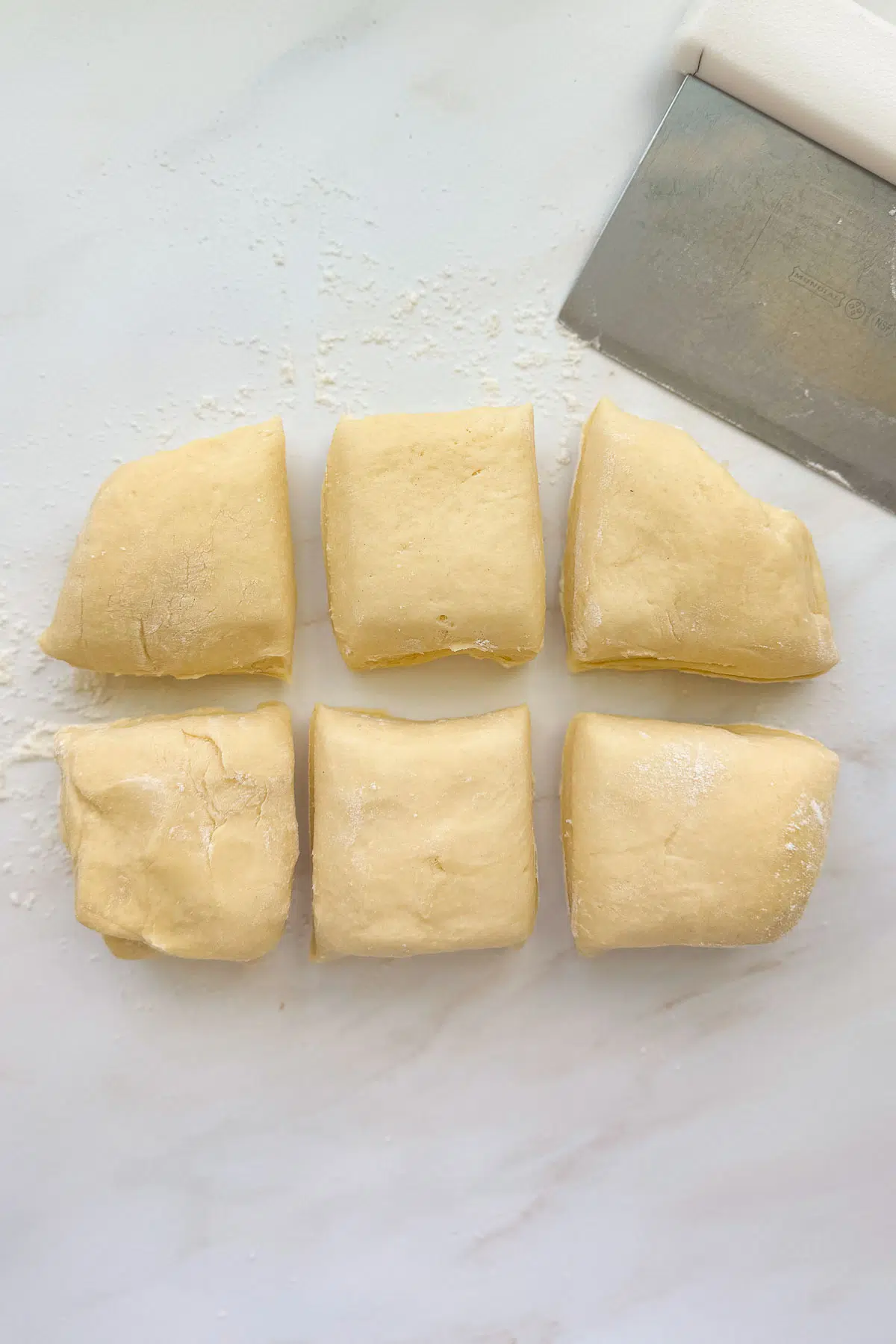
Step 5: Divide the brioche dough into two equal sized pieces, about 600g each. This recipe makes two loaves. Divide each half into 6 pieces.
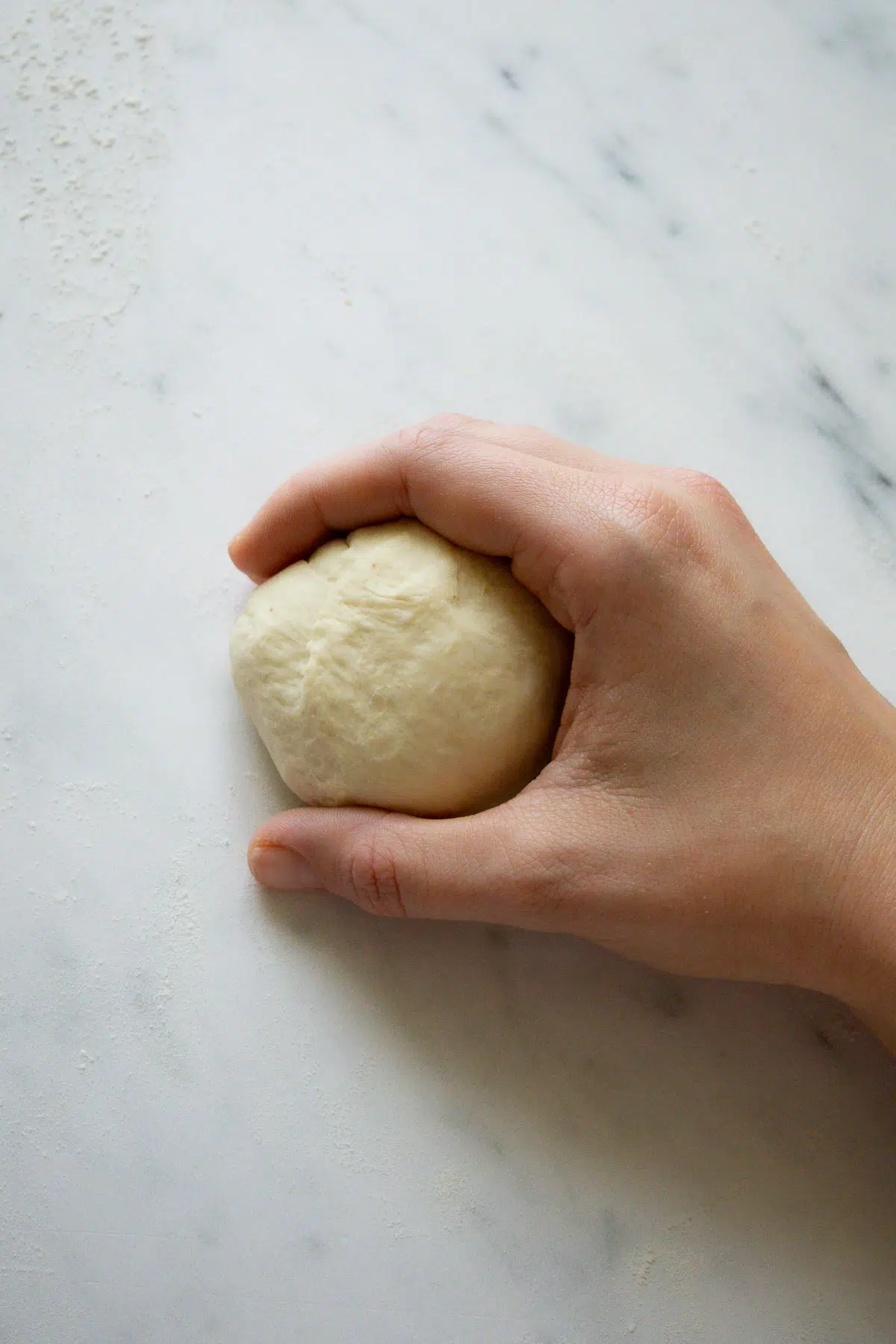
Step 6: Round each piece of brioche dough by cupping your hand around it, without pressing down, and rotating it in a circular motion. You should feel the dough ball tighten and smooth out. I use this same method for other recipes like my Skillet Dinner Rolls.
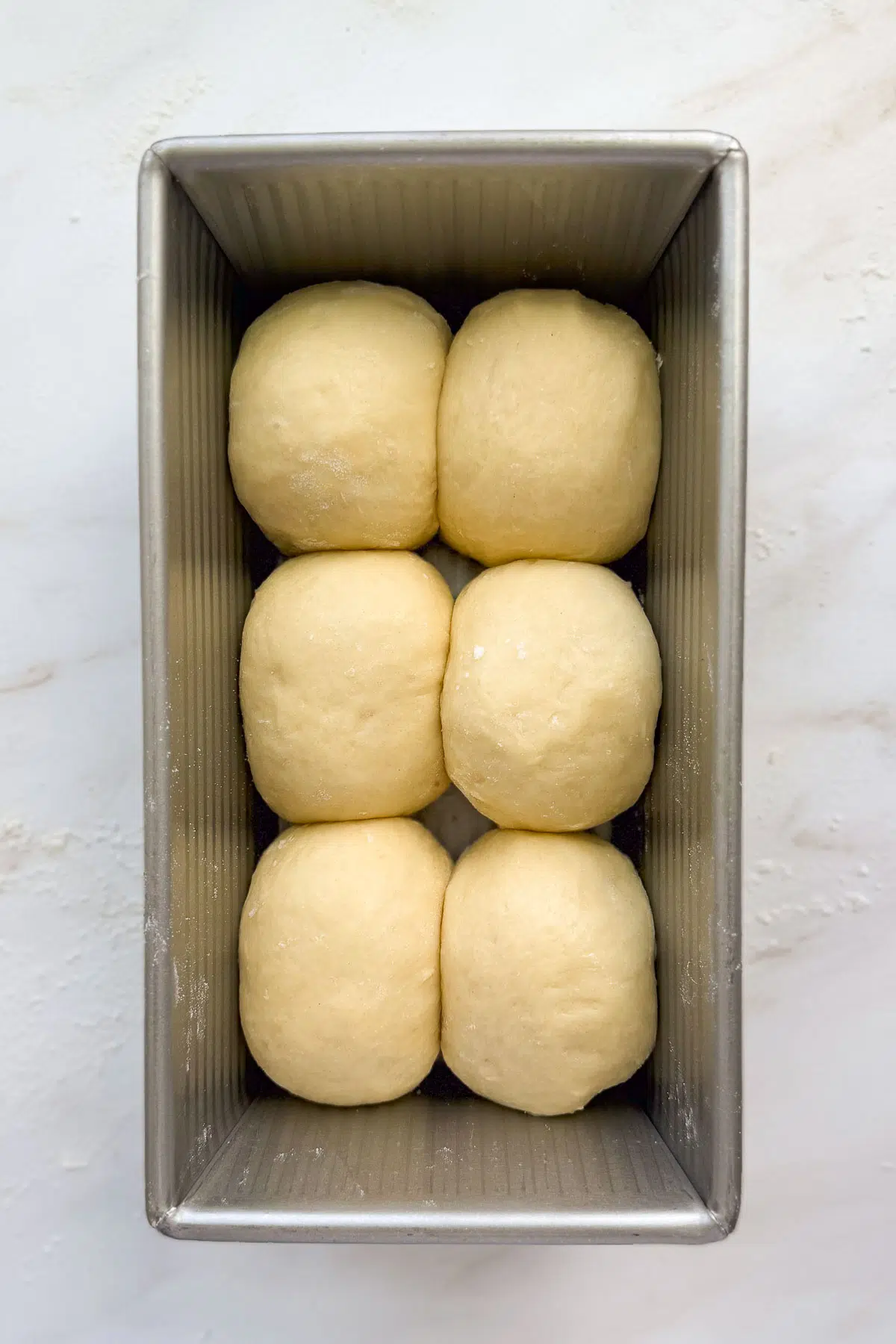
Place 6 rounded balls of brioche dough into a 4×8-inch/10×20-cm loaf pan.
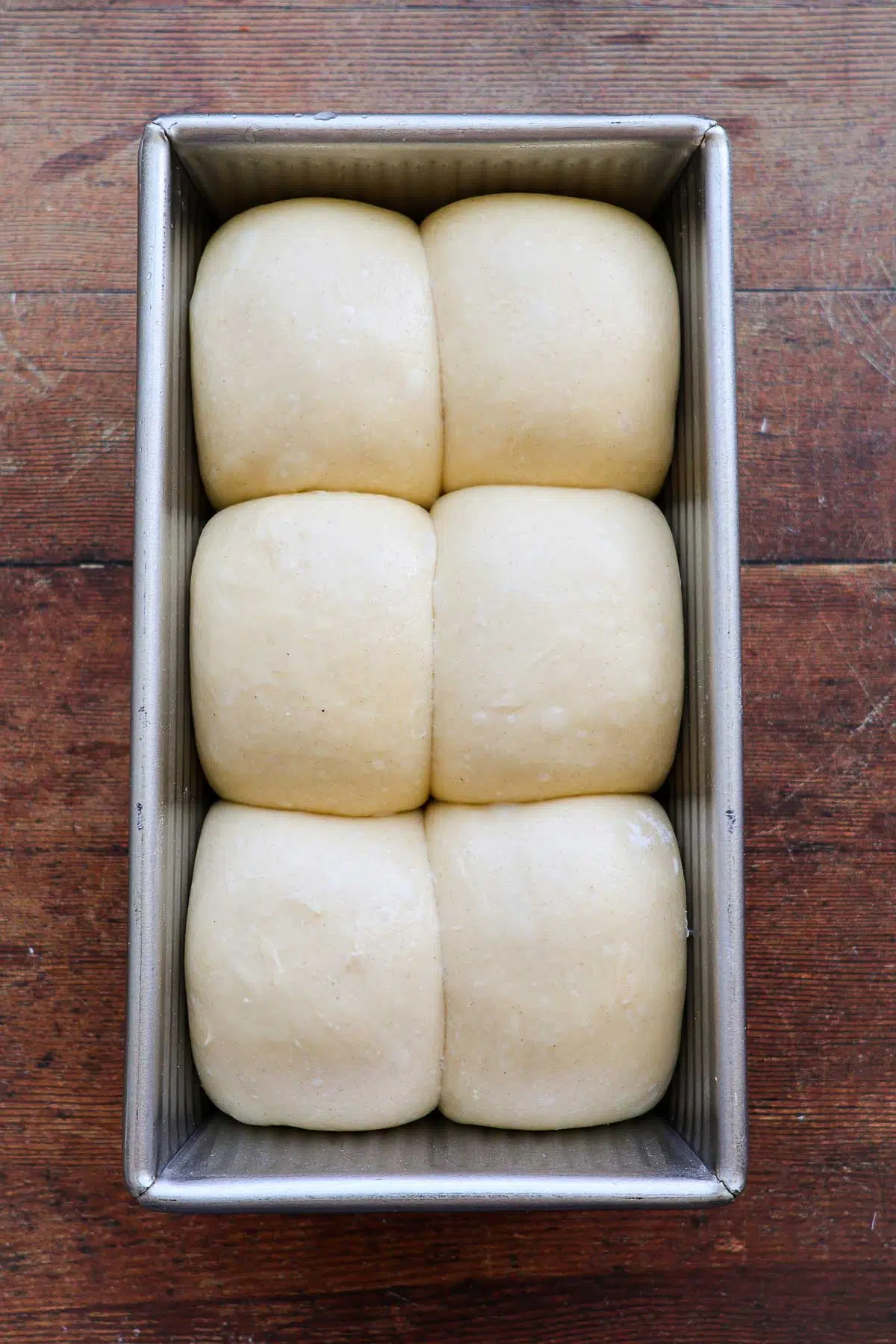
Step 7: Cover the loaf with plastic wrap (you can spray it with nonstick spray to keep it from sticking). Allow the loaf to rise until it is just above pan level, or until it passes the poke test.
How long should I let my bread rise?
Use the poke test to feel if the dough has risen enough. Use your fingertip to gently poke the side of the bun. It should leave an indent that slowly springs back. It should feel airy and bouncy. If it still feels rather dense, let it rise a bit more. If you poke the dough and it leaves an indent that never springs back, and the dough feels like it could be easily deflated, it has risen too long and should be bake immediately. The poke test works great for other easy bread recipes like my soft and fluffy Homemade White Bread.
The warmer your kitchen, the faster bread will rise. Look for the bread to be puffy and have risen about 50% in volume. It should be about 1 inch over pan level.
Baking
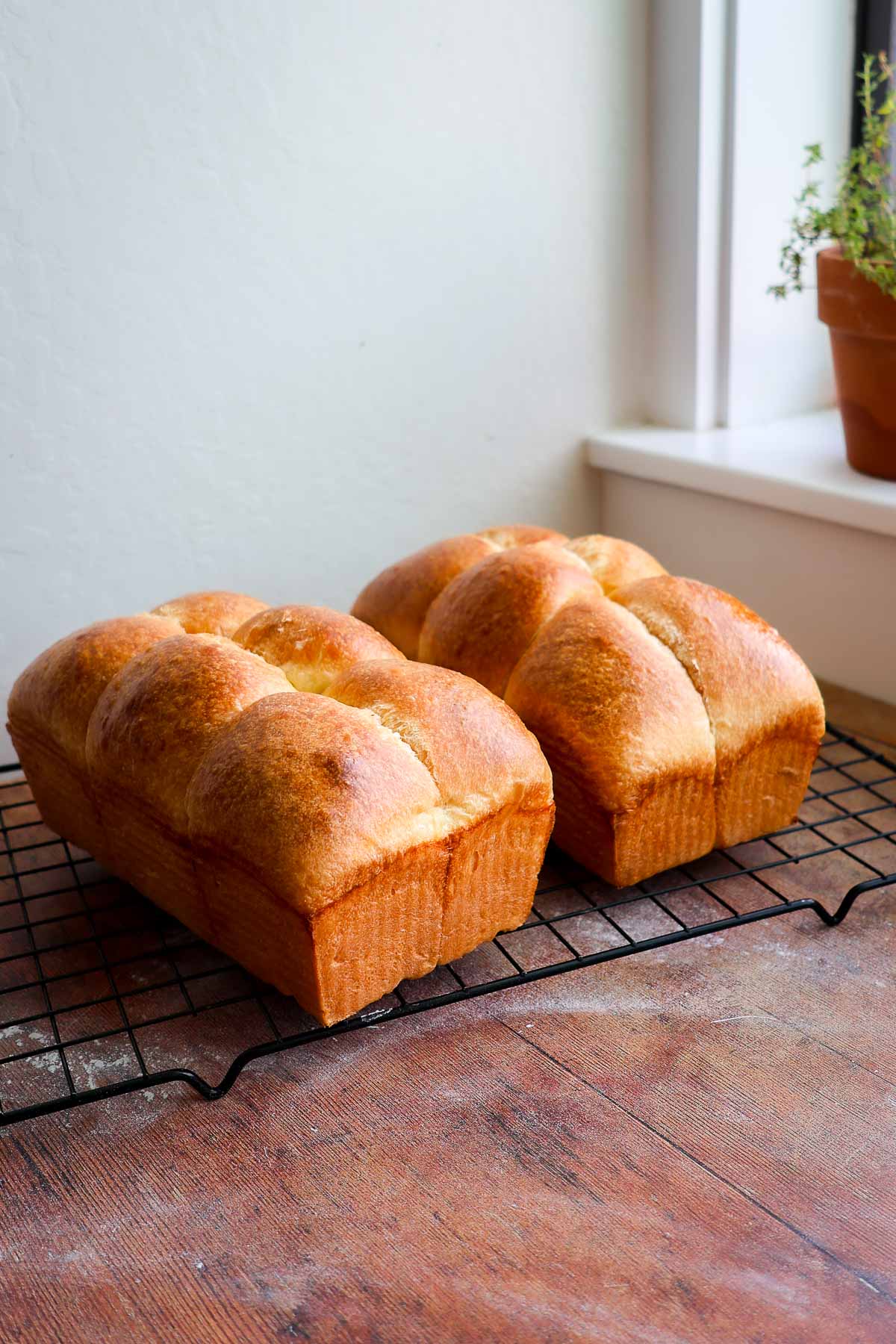
Step 8: Brush with egg wash. This gives the brioche bread a golden, shiny crust. Bake until golden and the internal temperature has reached 200°F/93°C.
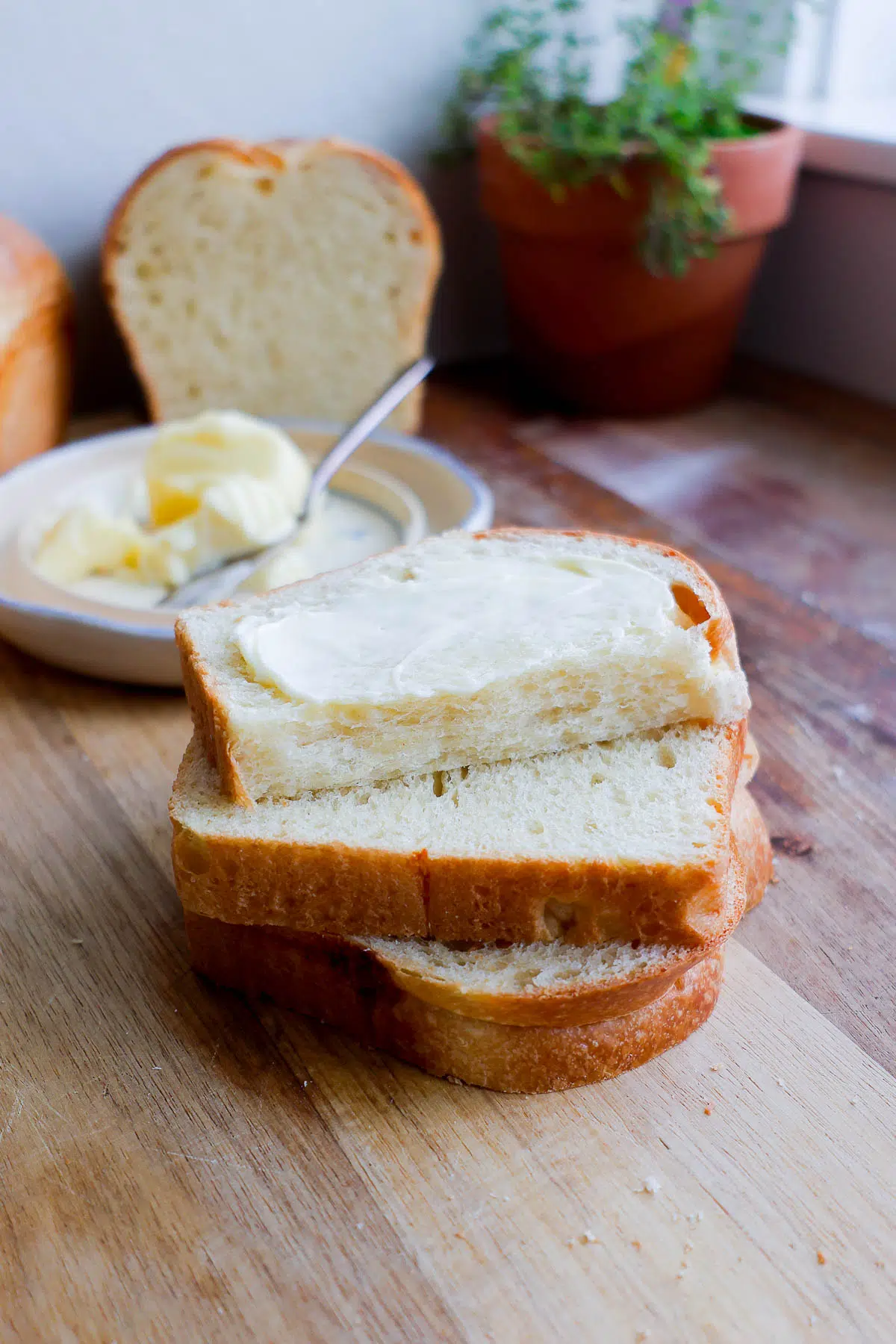
One of the hardest things about making homemade brioche, is waiting for it to cool. But trust me, it’s important to wait before slicing. The bread is continuing to bake right out of the oven – let it cool at least 1 hour before slicing.
Tips for Bakery-Style French Brioche Bread
- Use high quality butter. European butter has a high butterfat content of 82% or more and yields a richer flavor in brioche bread.
- Knead until windowpane. This is key to getting a brioche loaf that rises and holds its shape.
- Shape brioche while the dough is cold. If it’s too warm or soft, it will be very difficult to shape.
- Let the dough rise until it’s 1 inch above pan level, and use the poke test to make sure it’s ready to bake.
Frequently Asked Questions
How to Store French Brioche Bread
- Allow the buns to cool completely before storing in an airtight container. I like to use a zip top bag or two bread bags (to keep it from drying out). It will stay fresh for around 4 to 5 days.
- Freeze in a zip top freezer bag for up to 2 months.
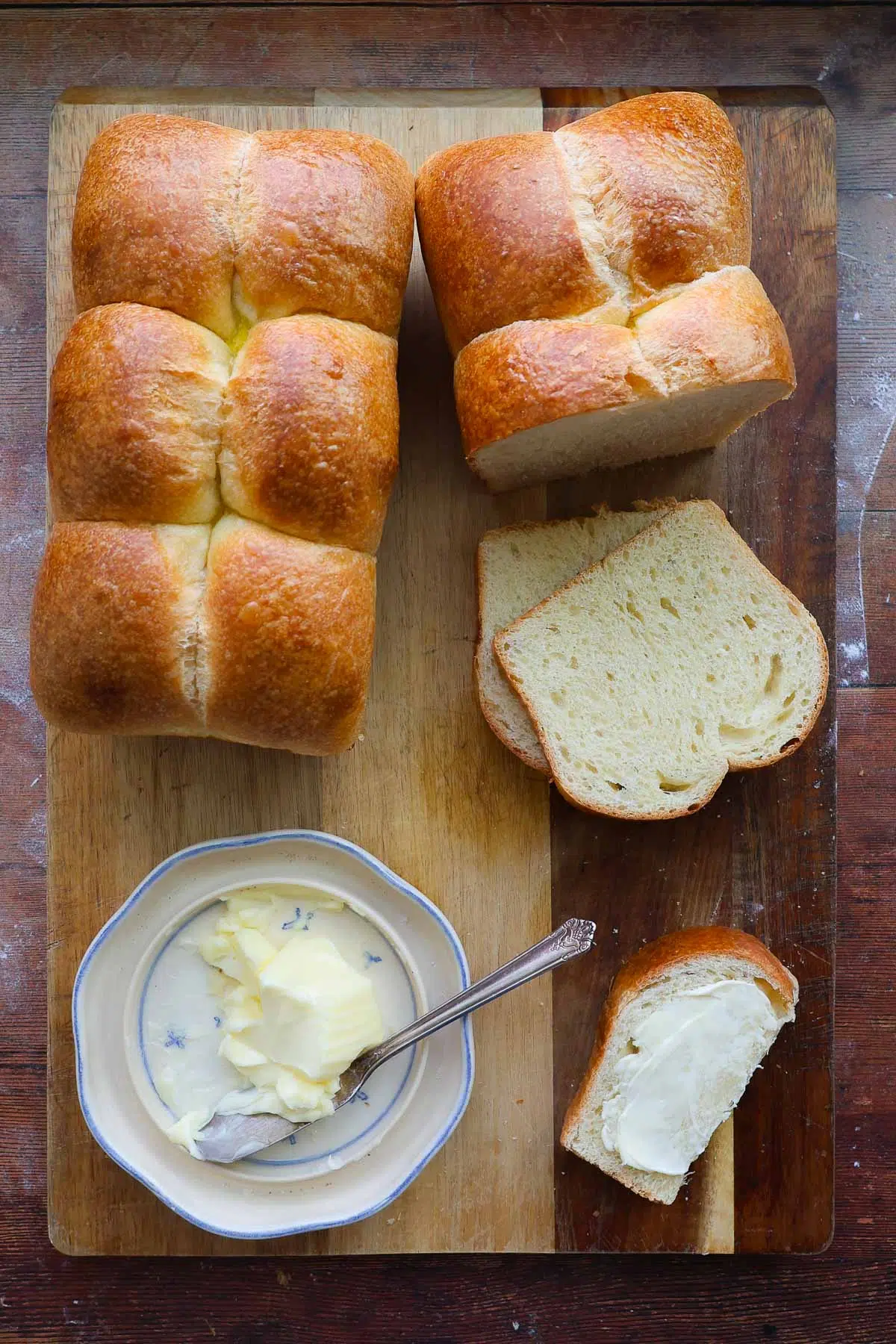
French brioche bread is one of those recipes that feels so rewarding when you master the technique. From the rich buttery dough to the soft, feathery crumb, this classic French bread brings a little bakery-style luxury into your own kitchen. Once you make it from scratch, you’ll understand why it’s so loved!
More Bread Recipes with Yeast
MADE THIS RECIPE AND LOVED IT? 🤎 Please leave a 5-star⭐️ rating and comment below! I love hearing how my recipes turned out for you! It impacts my blog so much and allows me to keep sharing helpful tips and delicious recipes with you!
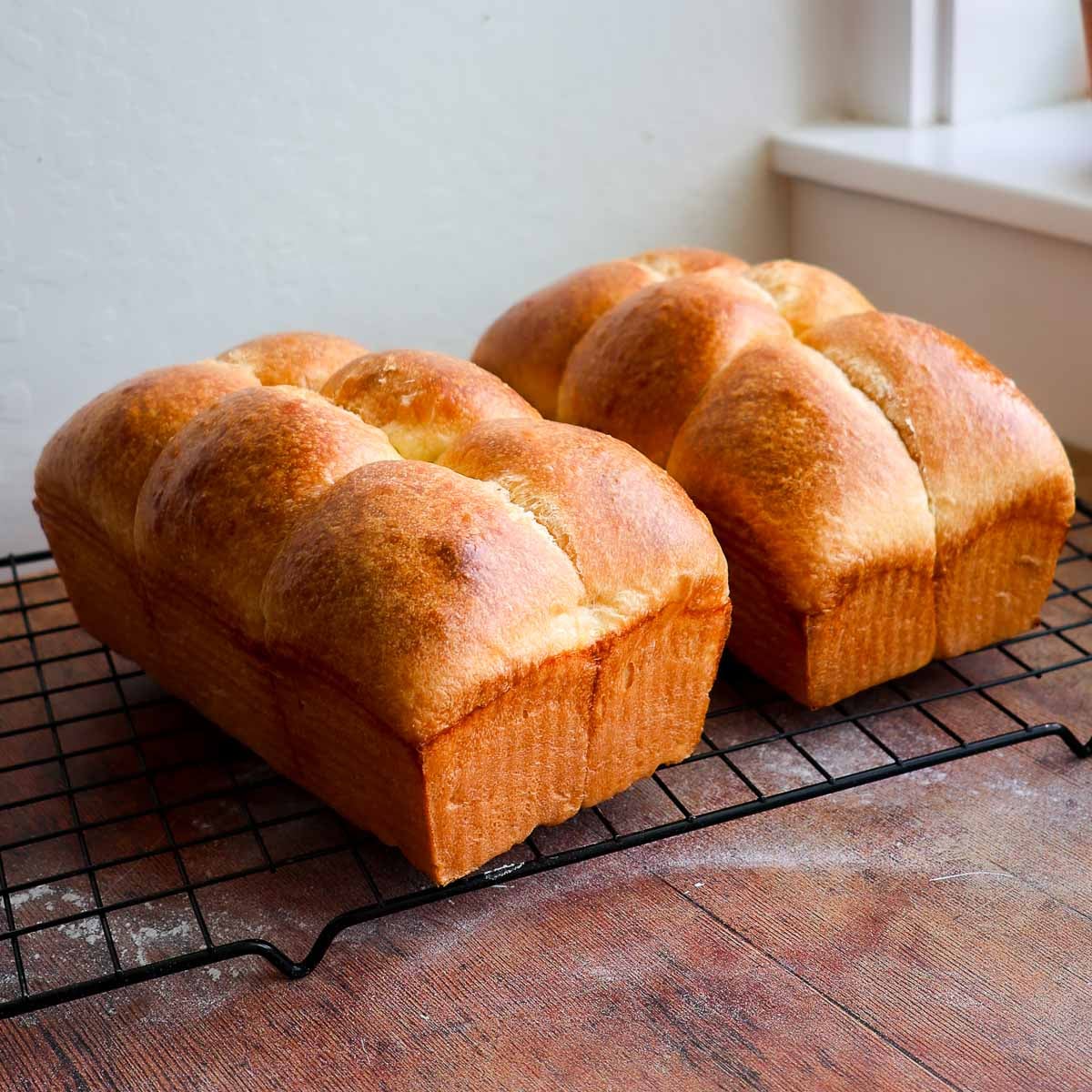
French Brioche Bread
Equipment
- 2 loaf pans 4×8-inches/10×20-cm
Ingredients
- 122 g warm whole milk around 95°F/32°C (½ cup)
- 12 g instant yeast* (4 teaspoons)
- 50 g sugar (¼ cup)
- 6 large eggs room temperature (around 300g)
- 10 g fine sea salt (2 teaspoons)
- 540 g bread flour divided (4½ cups, spooned and leveled)
- 227 g unsalted butter softened (1 cup/2 sticks)
- 1 large egg whisked together with a splash of water for egg wash
Instructions
- To the bowl of an electric mixer, add the warm milk, instant yeast, sugar, eggs, salt, and half the flour. Using the paddle attachment, mix on low speed until combined and smooth, around 1-2 minutes.122 g warm whole milk12 g instant yeast50 g sugar6 large eggs10 g fine sea salt270 g bread flour
- While on low speed, gradually add the remaining half of the flour, allowing it to fully incorporate after each addition. You may not need the entire amount of flour – use the feel of the dough as your guide. You want a soft, tacky dough, that doesn't feel wet. It will be somewhat firm, but will become softer after adding the butter.270 g bread flour.
- Gradually add the butter, 1 tablespoon at a time. Allow the butter to fully absorb into the dough between each addition.227 g unsalted butter (2 sticks)
- Knead the dough on low speed for 10-12 minutes, or until it reaches windowpane (it should stretch a few inches without tearing).
- Place the dough into a large greased bowl. Cover and place in the refrigerator to cold proof for at least 8 hours and up to 24 hours. While it cold proofs, it should increase in volume by 50-70%.
- Remove the dough from the refrigerator. Prepare two 4×8-inch/10×20-cm loaf pans and spray them with nonstick baking spray. Set aside. Flour your work surface and turn the dough out of the bowl. Divide the dough into 2 equal pieces, around 600 g each. Divide each piece of dough into 6 equal pieces, about 100g each. Round each piece into a round ball by cupping your hand and rotating the dough in a circular motion. You should feel the dough tight up and smooth out. Place 6 balls of dough in each loaf pan, in 3 rows of 2 pieces. Spray a piece of plastic wrap with non stick spray and cover the loaves. Let them rise until doubled in size, about 90 minutes.
- Towards the end of the final proof time, preheat the oven to 375°F/190°C. Allow the oven to preheat for at least 20 minutes before baking. Brush the tops of the loaves with the egg wash. 1 large egg for egg wash
- Bake for 22-25 minutes, or until the loaves are golden brown and have an internal temperature of 200°F/93°C. Remove from the oven and let the loaves cool in the pans for 20 minutes before removing them and cooling on a wire rack. Allow the loaves to cool at least 1 hour before slicing.
Notes
- *You can use active dry yeast instead of instant yeast. Make sure you bloom your yeast first. Whisk it into the warm milk and let it sit for 15 minutes. If it becomes foamy, you can proceed with the recipe. If not, replace it with fresh yeast.
- Store leftover bread in an airtight container for up to 5 days. You can also freeze in a zip top freezer bag for up to 2 months.
I have been looking for a good brioche bun for my burgers. I am making them for Memorial Day. When I make another recipe is it possible to add my fresh milled white wheat flour or Gold Medal unbleached wheat flour to the dough? Thanks for all the great recipes.
I made the bun dough yesterday and baked them this morning. They look and taste fantastic. Thank you for the great recipe.
Just made this dough for raspberry rolls (also on your website) last night! Instructions are clear to read and follow! Thank you!
Yay! So glad you’re enjoying it!