Baked Baking Soda for Soft Pretzels
Baked baking soda is an easy way to make your homemade soft pretzels even better. It helps give them a deep brown color, better flavor, and that chewy soft pretzel texture we all love. It’s a simple alternative to a traditional lye bath and gives you great homemade soft pretzels.
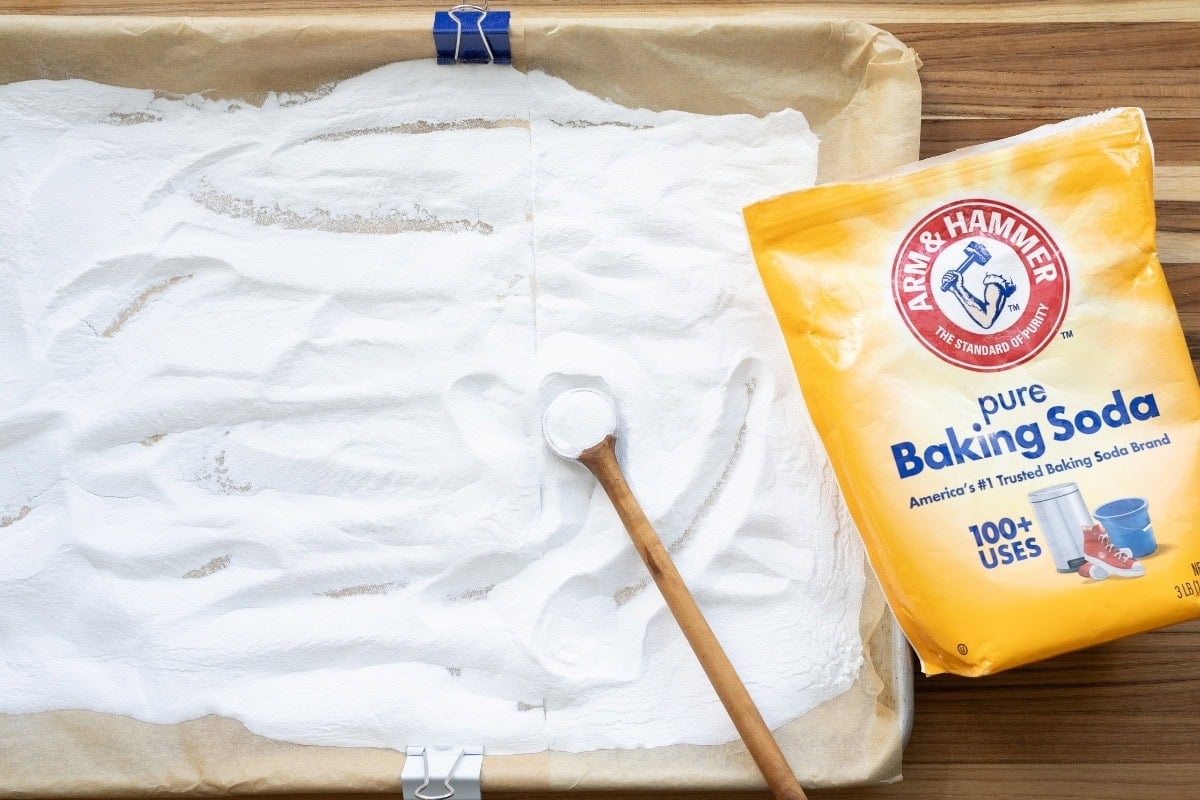
Quick Look: Baked Baking Soda for Soft Pretzels
- Prep Time: 5 minutes
- Bake Time: 1-2 hours
- Total Time: 1-2 hours
- Servings: This recipe makes enough baked baking soda for 3 separate batches of my soft pretzel recipe.
- Cook Method: Baked at 300°F/150°C
SUMMARIZE AND SAVE THIS RECIPE CONTENT ON:
Table of contents
- Quick Look: Baked Baking Soda for Soft Pretzels
- What is Baked Baking Soda?
- Why use Baked Baking Soda for Soft Pretzels?
- What does Baked Baking Soda do to Soft Pretzels?
- The science behind Soft Pretzels
- Baked Baking Soda vs. Baking Soda vs. Lye
- How to Make Baked Baking Soda
- How to Store Baked Baking Soda
- Using Baked Baking Soda for Pretzels
- Frequently Asked Questions
- Try these Recipes with Baked Baking Soda
- Baked Baking Soda Recipe
What is Baked Baking Soda?
Baked baking soda starts out as the same baking soda you probably already have in your pantry: sodium bicarbonate.
When sodium bicarbonate is heated, it releases carbon dioxide and water and converts into sodium carbonate. Sodium carbonate has a higher pH than regular baking soda, which means it’s more alkaline.
That’s exactly what we want for soft pretzels.
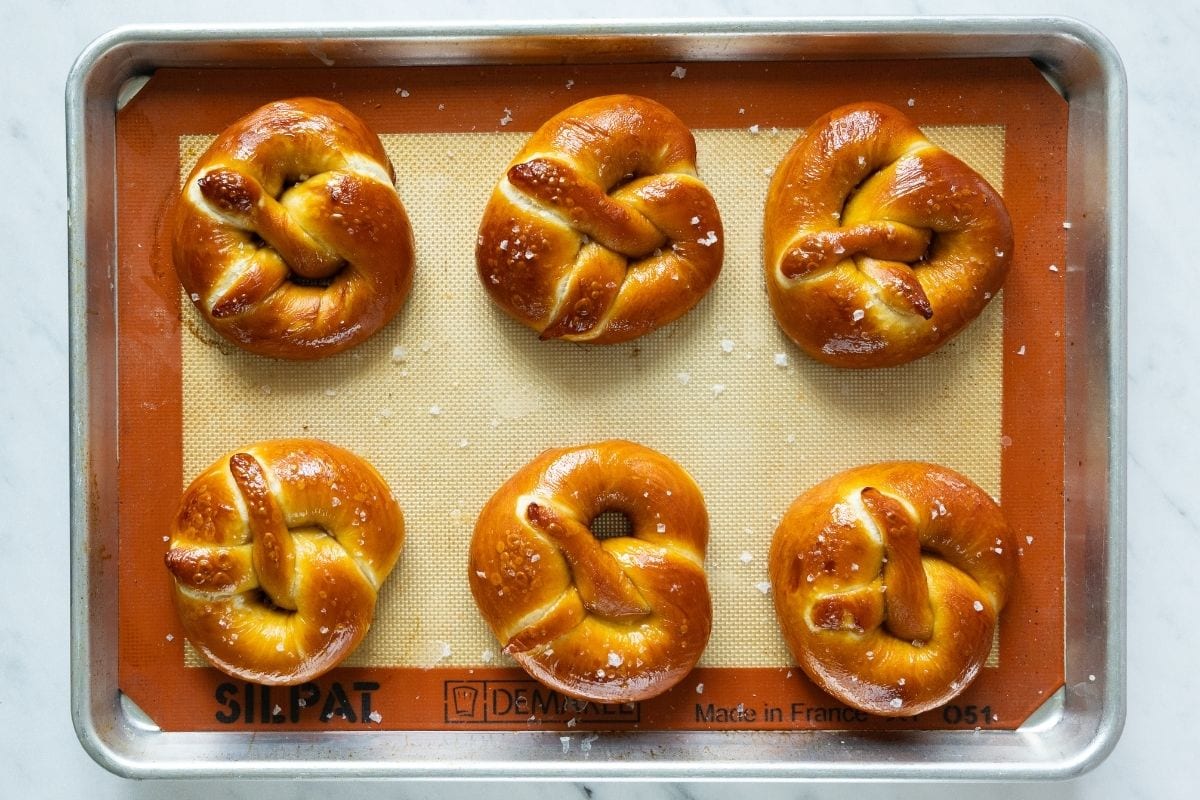
Why use Baked Baking Soda for Soft Pretzels?
One of the things that makes a soft pretzel different from an ordinary bread roll is the alkaline bath it receives before baking, also known as a “baking soda bath”.
Tradition German soft pretzels, like the ones in my cookbook, The Baker’s Bucket List, are dipped in a food-grade lye solution. That highly alkaline environment helps give them their distinctive dark brown exterior, chewy surface, and recognizable pretzel flavor.
Many homemade soft pretzel recipes replace the lye with regular baking soda because it’s much easier for home bakers to work with. It works, but regular baking soda isn’t nearly as alkaline as lye, and if you’ve ever tasted that metallic flavor from homemade soft pretzels, it’s due to that lower alkalized level.
What does Baked Baking Soda do to Soft Pretzels?
Baking the baking soda first gives us a great middle ground.
It creates sodium carbonate, which is more alkaline than regular baking soda. Using it in your pretzel bath helps give your pretzels:
- A deeper golden-brown color
- A more pronounced pretzel flavor
- A more characteristic pretzel crust and texture
- Better, more even browning in the oven
It’s one small extra step that can make a noticeable difference in homemade pretzels.
The science behind Soft Pretzels
You don’t need to understand the chemistry to make great pretzels, but the science behind it is pretty interesting!
Much of that beautiful brown color comes from the Maillard reaction. This is a series of reactions between amino acids and sugars that occurs when food is heated and creates new colors and flavors.
A more alkaline environment encourages these reactions to happen more readily. By treating the outside of your pretzel dough with an alkaline solution before baking, you’re essentially preparing the surface to brown more quickly and develop more flavor once it hits the hot oven.
The alkaline bath also affects the surface of the dough, helping create the smooth, distinctive exterior we associate with a soft pretzel.
That’s why the bath isn’t just an optional finishing step—it plays an important role in making your bread actually taste and look like a pretzel.
Baked Baking Soda vs. Baking Soda vs. Lye
Regular baking soda: Sodium bicarbonate is mildly alkaline and is commonly used in homemade pretzel recipes. It works, but you’ll typically get a lighter color and less pronounced pretzel flavor. It can also tend to leave a kind of an unpleasant metallic aftertaste.
Baked baking soda: Heating sodium bicarbonate converts it into sodium carbonate, making it more alkaline. This helps give homemade pretzels deeper color and more characteristic pretzel flavor and texture.
Food-grade lye: Sodium hydroxide is much more alkaline and is traditionally used for pretzels. It produces that unmistakable deep brown pretzel crust, but because it’s highly caustic, it requires careful handling and specific safety precautions. While this method produces the best soft pretzels (in my opinion), it’s not always a convenient option for home bakers.
For my homemade pretzels, baked baking soda gives great results while being a more approachable option for a home kitchen.
How to Make Baked Baking Soda
I prefer to determine when my baked baking soda is ready by weight rather than time. Here’s why: as it converts from sodium bicarbonate to sodium carbonate, it loses carbon dioxide and water. That means the finished product weighs less than what you started with.
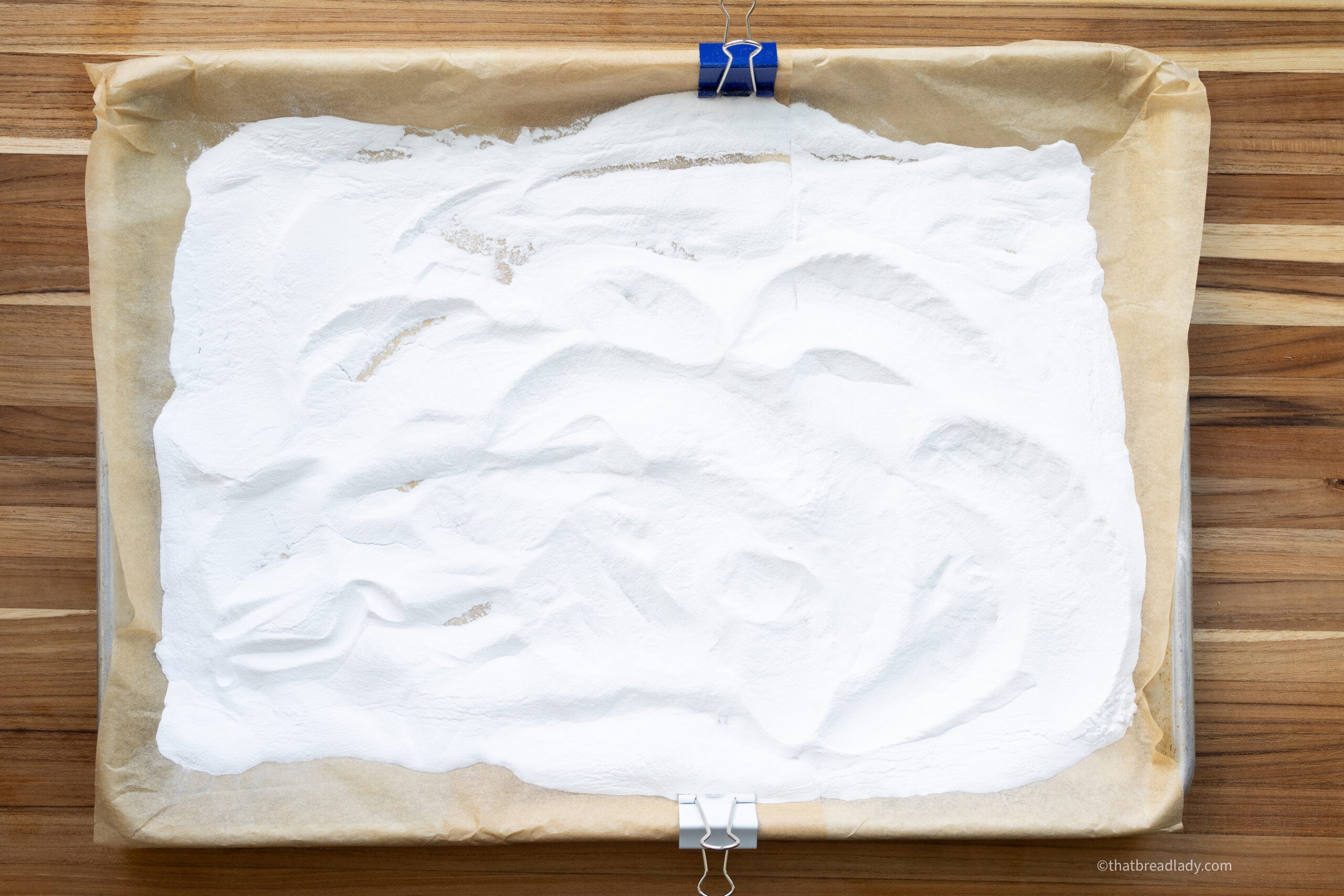
- Line a baking sheet with foil or a large piece of parchment paper. The lining should come up the rim of the pan to keep the baking soda inside. Weigh the lined baking sheet on a kitchen scale, and make a note of the weight.
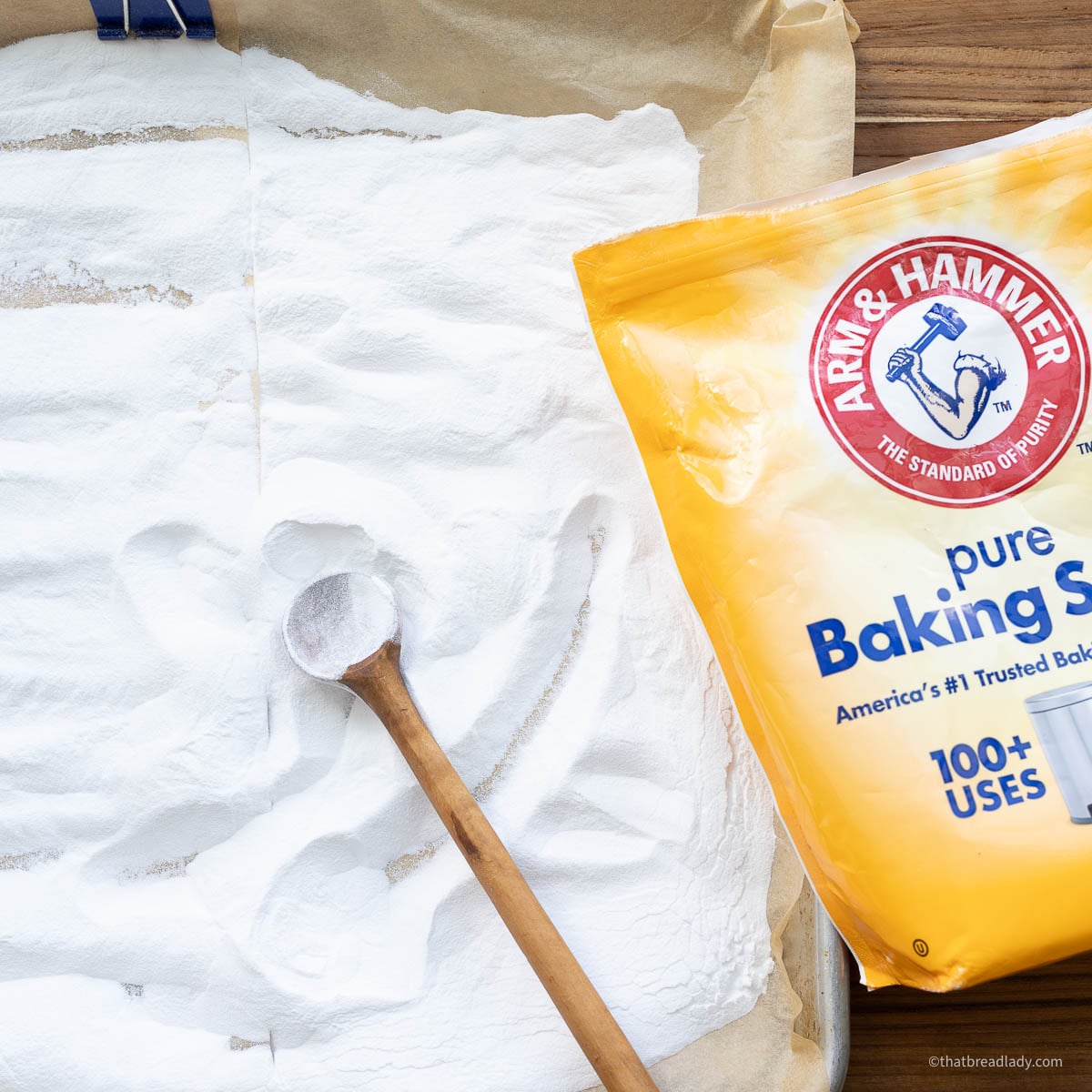
- Spread the baking soda over the pan. It works best if it’s a thin layer.
- Bake at 300°F/150°C for 1 to 2 hours, stirring the baking soda every 30 minutes, until the weight reduces by 30%.
How to Store Baked Baking Soda
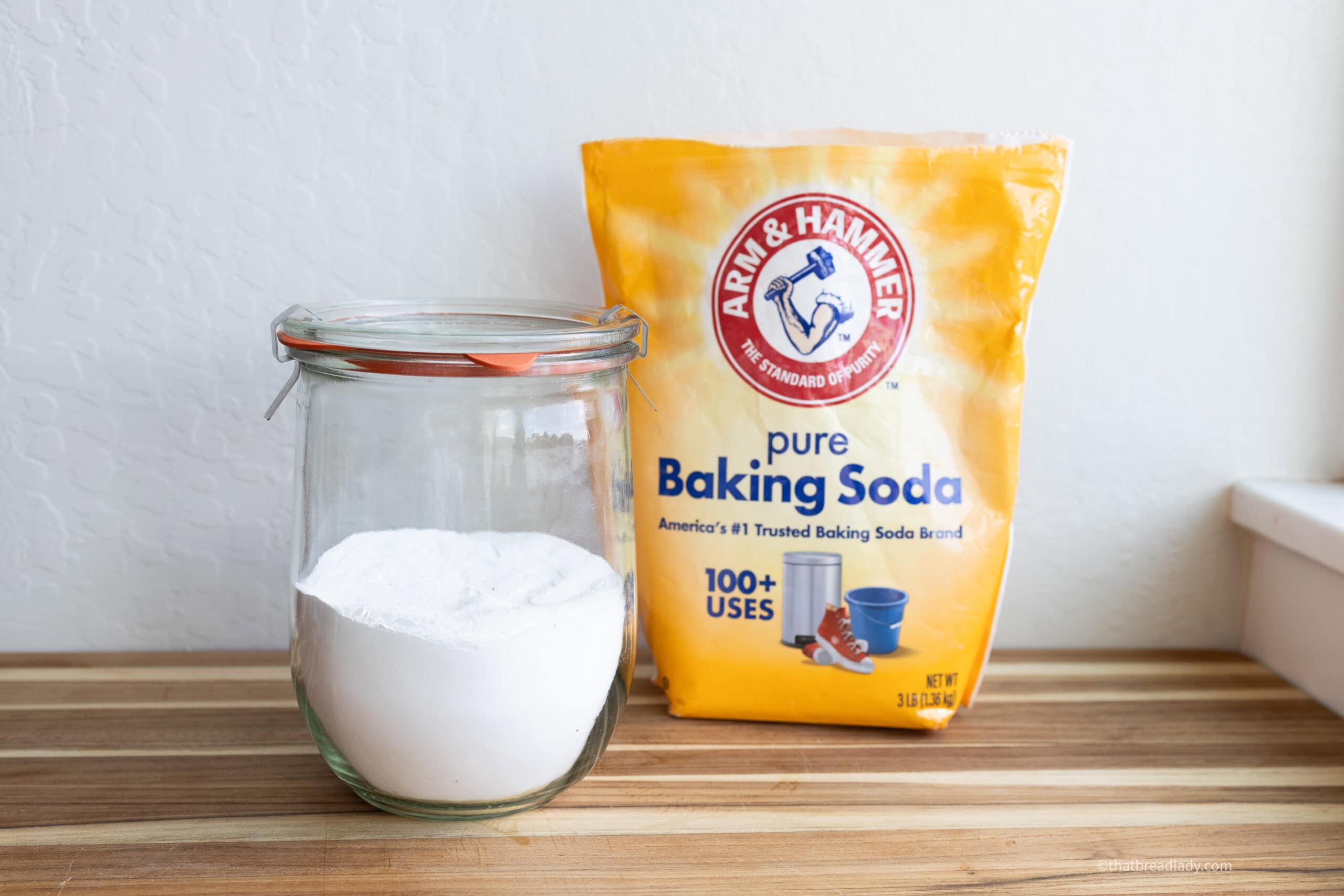
Once completely cooled, transfer the baked baking soda to an airtight container and store it in a cool, dry place.
Because moisture can affect it, make sure the container stays tightly sealed. Properly stored, it can be kept indefinitely, so you can make a batch and have it ready whenever a soft pretzel craving hits!
An important safety note
Once you’ve baked your baking soda, you’re no longer handling ordinary sodium bicarbonate. You’ve created sodium carbonate, which is more alkaline and should be handled carefully. Avoid touching it with your bare hands, inhaling the powder, or getting it near your face or eyes. If it comes in contact with your skin, wash the area thoroughly with soap and water. Keep the container clearly labeled and stored safely away from children and pets.
Using Baked Baking Soda for Pretzels
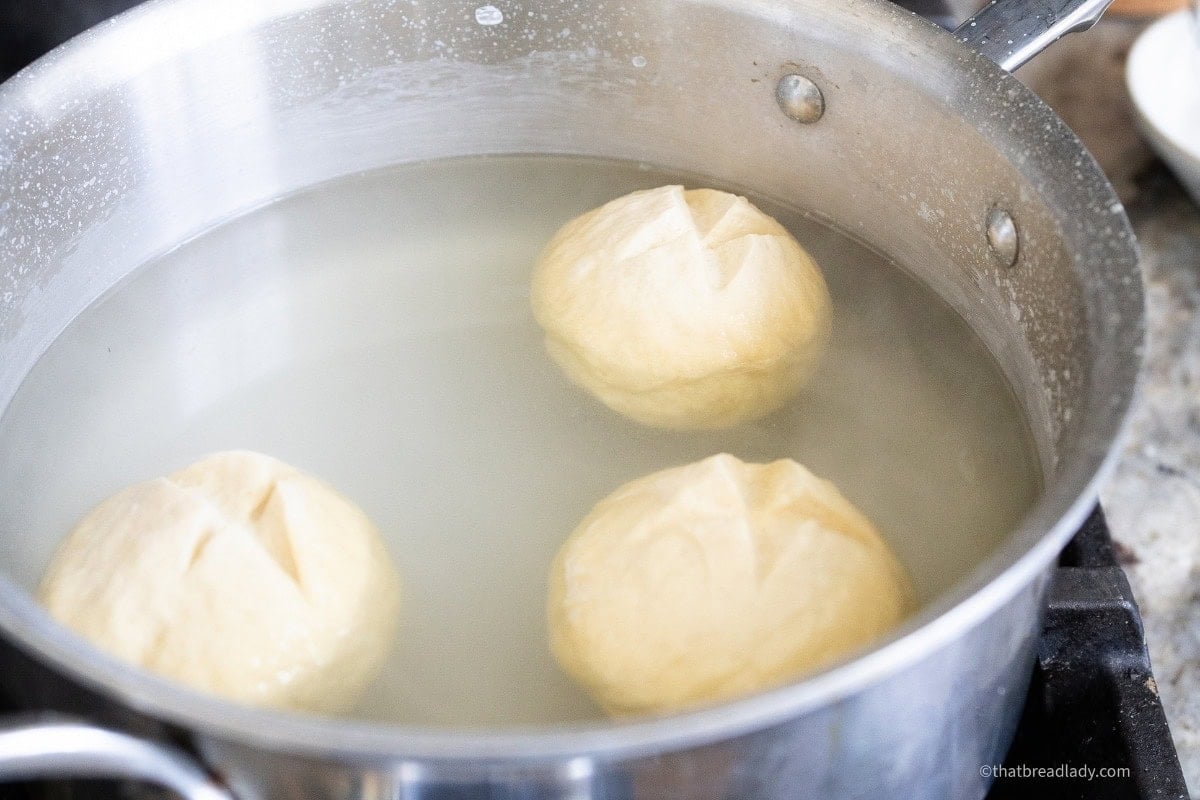
Baked baking soda is dissolved in water to create the alkaline bath used for shaped pretzels before they’re baked. The exact concentration and dipping method matter, so rather than guessing at the amounts, follow the directions in my Soft Pretzel recipe for preparing and using your pretzel bath. You can substitute baked baking soda 1:1 with regular baking soda, for soft pretzels.
Frequently Asked Questions
Try these Recipes with Baked Baking Soda
MADE THIS RECIPE AND LOVED IT? 🤎 Please leave a 5-star⭐️ rating and comment below! I love hearing how my recipes turned out for you! It impacts my blog so much and allows me to keep sharing helpful tips and delicious recipes with you!
Baked Baking Soda Recipe
Baked Baking Soda for Soft Pretzels
Equipment
- 1 kitchen scale
- 1 half sheet baking pan
Ingredients
- 16 ounces baking soda (450g)
Instructions
- Preheat the oven to 300°F/150°C.
- Line a half size baking sheet with parchment. I like to use two pieces of parchment and secure it with clips – it contains the baking soda much better than just one piece. You can also use aluminum foil if you prefer.
- Weigh the lined pan on a kitchen scale and make a note ofthe weight. Zero the scale and add the baking soda, weighing out 16 ounces, or about 450 grams.
- Spread the baking soda over the parchment evenly. Place it in the oven on the middle rack and bake until the total weight is reduced by 30%, stirring every 30 minutes (This could take 1 to 2 hours). To determine how much weight has baked off, place the baking sheet with baking soda on the scale to weigh it, subtract the weight of the pan and parchment – the leftover weight is the baking soda. If you are baking 16 ounces/450 g of baking soda, the final baking soda weight should be around 300 g.
- Allow the baking soda to cool completely on the pan before using it or storing it, around 1 hour. Pour it into a container and seal or cover it so that it’s airtight. Do not touch the baked baking soda with your hands, as it is now a caustic substance. If you do come in contact with it, wash thoroughly with soap and water. Also be careful to not inhale near the baking soda or touch your face or eyes when handling it.
- Store in a cool dry place – it will store indefinitely.
thank you for this. Their are certain thinks I’ve quit baking because of that metallic flavor. Never knew this. I’m grateful. for the info
So glad! Yes, that is an unpleasant flavor, especially disappointing after all the work of making homemade pretzels. You’ll really love the results from this method!